by Xinhua writer Liu Jie
BEIJING, April 7 (Xinhua) -- The Trump administration's threat to impose more tariffs on imports from China escalates economic brinkmanship with Beijing.
Dissatisfied with slapping tariffs on Chinese imports worth 50 billion U.S. dollars, the U.S. government threatened additional duties on Chinese goods worth 100 billion U.S. dollars Thursday.
China feels it is only polite to reciprocate. Hours later, China said it will "fight till the end at any cost" and take "comprehensive countermeasures."
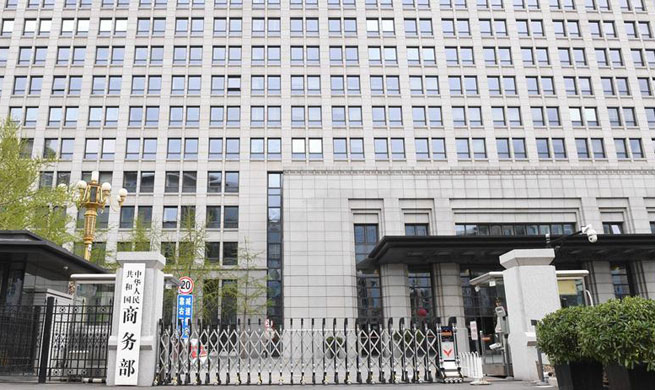
"We don't want a trade war, but we are not afraid of it," said a spokesman of China's Ministry of Commerce Friday.
China's last tariff list targeting U.S. imports, including beef, whiskey and passenger vehicles, has sent U.S. market into tailspin.Industries are under pressure. Boeing and other big industrial exporters, whose biggest markets are China, are on Wall Street's loser board.
If the tariff lasts, midwestern farmers and Boeing workers will be the ones to feel the pain.
"The fact that China is our number one soybean customer makes us very vulnerable. Our farm and many others will be the first casualties of a trade war," Indiana soy and corn farmer Brent Bible said in a national television advertisement.
The U.S. Department of Agriculture projects that retaliatory tariffs will hurt U.S. farmers at a time they are already struggling. Their earnings are expected to fall 6.7 percent this year to 59.5 billion dollars, about half of the United States' 2013 record high.
China has ample alternatives. Chinese airlines can buy planes from Airbus. Brazil and Argentina will be happy to supply soybeans.
"If people want to play tough, we will play tougher with them, and see who lasts longer," Chinese Ambassador to the United States Cui Tiankai put it earlier.
The Trump administration's expectation of reducing the bilateral trade deficit by 100 billion U.S. dollars is unreasonable.
Different statistical approaches have inflated the U.S. calculation of its trade deficit with China by about 20 percent every year, according to China's Commerce Minister Zhong Shan. The root cause of the imbalance is the U.S. economic structure, which features low savings and high consumption.
Chinese exports to the United States lower U.S. consumer prices by 1 to 1.5 percentage points. In 2015, trade with China allowed American families to save 850 dollars per household, according to a study by the U.S. China Business Council.
Reducing imports from China will not create jobs in the United States. Rather, it will increase prices for American consumers and create jobs in Vietnam and other countries that step in to replace the imports that previously came from China.
The U.S. scorn for the multilateral trade arrangement and the World Trade Organization risks alienating itself from its allies.
Tit-for-tat moves bear the hallmarks of a classic trade rift that could escalate. We are on a dangerous downward spiral.
China's confidence and strength have improved by overcoming difficulties and dealing with pressure over 40 years of reform and opening-up.
Fighting with growing confidence and strength, China shall defend its interests, whatever the cost may be.