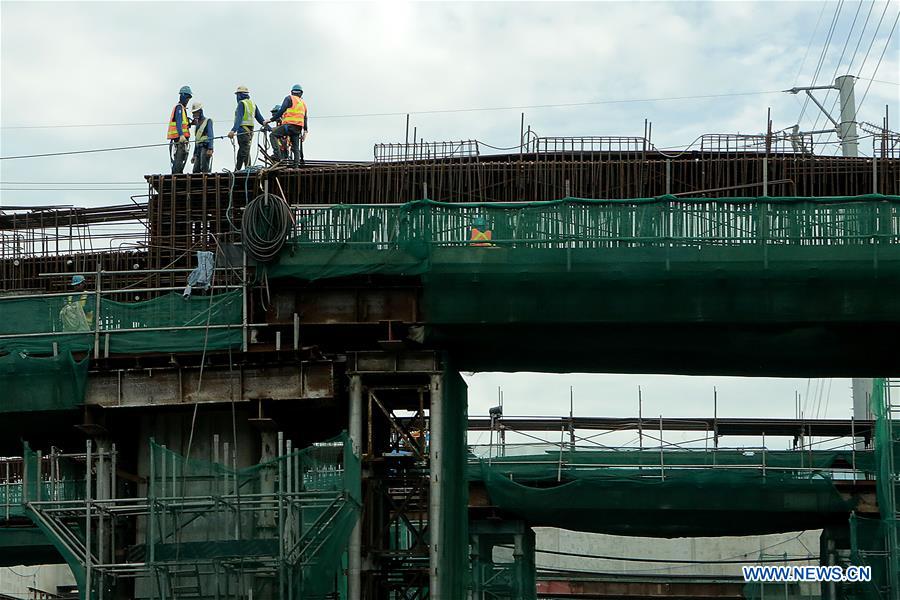
Workers are seen at a construction site in Manila, the Philippines, July 25, 2018. The International Monetary Fund (IMF) said on Wednesday that the Philippine economy continues to grow strongly, with the real gross domestic product (GDP) projected to expand 6.7 percent in 2018 and 2019. (Xinhua/Rouelle Umali)
MANILA, July 25 (Xinhua) -- The International Monetary Fund (IMF) said on Wednesday that the Philippine economy continues to grow strongly, with the real gross domestic product (GDP) projected to expand 6.7 percent in 2018 and 2019.
An IMF team that visited the Philippines from July 11 to 25 said the Philippines has been one of the region's strong economic performers over the past years, reaping the fruits of prudent policies and critical reform.
"The medium-term economic outlook also remains favorable," IMF Asia and Pacific Chief Luis Breuer said.
However, Breuer also warned that near-term risks have increased, stemming from rising inflation and a changing external environment that poses great uncertainty.
"The Philippine economy is performing well. Real GDP grew 6.7 percent in 2017 and the team projects that this rate will be sustained in 2018 and 2019, underpinned by strong consumption and investment, including public investment," Breuer said.
He said rising international oil prices, external pressures on the peso, one-off effects of higher excise taxes, and domestic demand pressures have led to a rapid increase in inflation, to 5.2 percent in June 2018 with year-to-date inflation averaging 4.3 percent.
Breuer said the medium-term economic outlook "remains favorable, but short-term risks have risen."
To strike the right balance between growth and macroeconomic stability, Breuer suggested that policies need to be adjusted to reduce inflationary pressures, while structural reforms should continue to support inclusive growth.
The team stressed the need to support growth while safeguarding macroeconomic stability by adjusting policies and maintaining a healthy external position.