by Mohamed al-Azaki
SANAA, Aug. 20 (Xinhua) -- While millions of Muslims across the globe are sacrificing goats and cows to celebrate Eid al-Adha holidays, or the Islamic "Festival of Sacrifice" starting on Aug. 21, millions of people in the war-torn Yemen are unable to secure one meal a day.
According to recent UN reports, 22.2 million Yemenis depend on aid, and 8.4 million people out of Yemen's 29-million population are struggling to secure next meal.
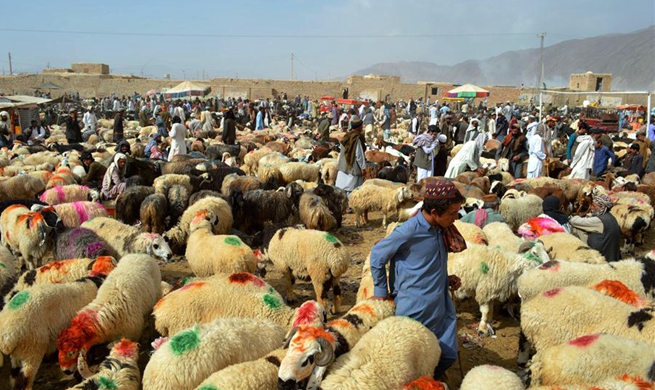
In Noqum livestock market in eastern Sanaa, dozens of people flocked to buy goats, cows to celebrate the sacrifice festival.
Even some cattle here showed signs of acute malnutrition.
Hosen al-Rajawi, a buyer, said his family would share the cost of a sacrificial cow with six other neighbour families for the festival.
"The cow, which was priced at 350,000 Yemeni rials (636.36 U.S. dollars) during last year's Eid al-Adha, is now sold at one million rials," al-Rajawi told Xinhua.
Saif Mohammed, another buyer in the market, complained that the cattle prices are much higher than the previous year.
"We have already been suffering from soaring prices, war, blockade. Therefore, we are enduring a lethal trinity," Mohammed said.
Meanwhile, Mohammed al-Firsi, a cattle trader, said the hikes in the prices were caused by the soaring prices of fodder, water and fuel.
"The business this year is very weak compared with the previous year because of the war, all-out blockade and the rise in exchange rate of dollar against the Yemeni rial," said al-Firsi.
The impoverished Arab country has been locked into a civil war since 2014, when Iran-backed Shiite Houthi rebels overran much of the country and seized all northern provinces, including the capital Sanaa.
The Saudi-led Arab coalition forces intervened in Yemen's war to fight the Houthis in March 2015 in response to an official request from internationally-recognized Yemeni President Abd-Rabbu Mansour Hadi to regain control over the counry.
In 2016, Hadi's government accused Houthis of using the money of Yemen's Central Bank to finance their military deployments, and moved the bank from Houthi-held capital Sanaa to Aden, the government's temporary capital in the south.
However, the accusations were denied by the Houthi group.
The war has caused a rapid deterioration in the country's already shaken economy and triggered the prices to soar.
In the meantime, more than tens of thousands of civil servants in the north remained unpaid for nearly 24 months due to the war.
Mohammed al-Alawi, a journalist in the Sanaa-based state-run 26 September daily newspaper, said he also does not have enough money to buy his five children meat during the ceremonies.
"I will buy my children one chicken on the first day of the four-day holiday, but I can't secure the next meal," he said.