BEIJING, June 6 (Xinhua) -- As the Dragon Boat Festival approaches, a bank clerk surnamed Zhang ordered some sachets of Chinese herbal medicine on Taobao, a major e-commerce platform.
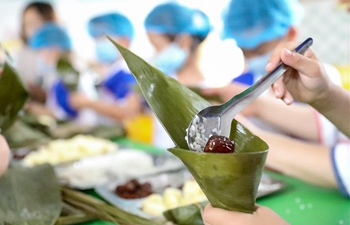
He bought some zongzi, a traditional rice snack eaten at over the festival, and planned to bring his child to watch a dragon boat race.
It is a decade since the Dragon Boat Festival was inscribed on the UNESCO Intangible Cultural Heritage of Humanity list. Falling on the fifth day of the fifth lunar month, the festival is observed in memory of Qu Yuan, an ancient poet in China, with dragon boating and zongzi.
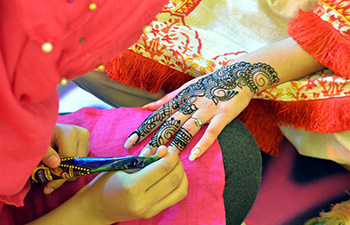
Nowadays, more young people in China celebrate traditional festivals with folk activities that symbolize traditional culture and represent the Chinese values of family and harmony.
"Intangible cultural heritage" is becoming popular among young Chinese, with its continuously innovative and diverse forms.
At the Palace Museum's online store, formidable emperors of Chinese history are given a cute spin. Thousands of creative products by the museum, ranging from lipsticks, fans to adhesive tapes and wallets, win positive customer reviews.
Art exhibitions in recent years have seen increasing intangible cultural heritage elements. In May, the Cultural Creative Products Expo made its debut as part of the 12th China Art Festival held in Shanghai, and achieved total sales of 34 million yuan (4.9 million U.S. dollars) within four days, demonstrating the growing business opportunities for China's cultural creative industry.
Besides being part of modern Chinese lifestyle, intangible cultural heritage can also provide people a means to escape poverty.
A program named "Bring Mothers Home" was set up in Xiangxi, central China's Hunan Province in 2012, enabling women to support their families by working locally as embroiders instead of migrating to distant cities for work.
Many people living in poverty-stricken remote mountainous regions now are able to make a living by their traditional craftsmanship.
An initial list of programs for traditional craftsmanship to be revitalized was issued in 2018 by several ministries, amid efforts to protect intangible cultural heritage and help boost employment and poverty alleviation.