SAN FRANCISCO, July 11 (Xinhua) -- A multimedia exhibition on U.S. encampment of Japanese Americans during World War II (WWII) is a wakeup call to resurgent discriminatory policy against immigrants in the United States, San Franciscan viewers said Thursday.
The history re-told at the exhibition is horrifying, said Cher Evans, a San Franciscan social worker, looking at pictures of Japanese Americans who were removed from their homes.
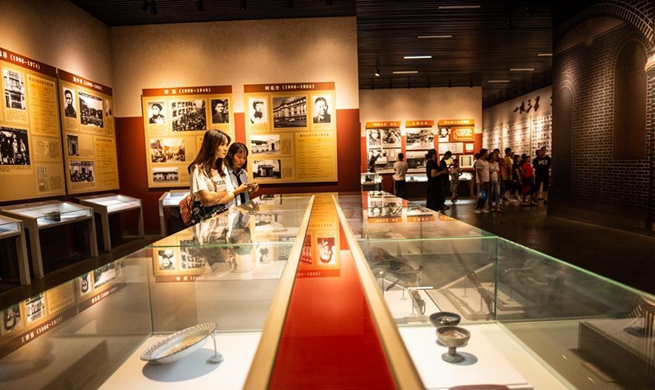
The exhibition, titled Then They Came for Me: Incarceration of Japanese Americans during WWII, examined the terrifying episode in the U.S. history when the government evicted 120,000 American citizens of Japanese ancestry and put them in encampments out of security concerns.
The ongoing exhibit features imagery by noted American photographers Dorothea Lange and Ansel Adams, alongside works by incarcerated Japanese American artists Toyo Miyatake and Mine Okubo.
"It's horrible, it's just unbelievable, I mean, it wasn't that long ago," Evans said, adding that there's so many people who didn't even know about it.
Marcia Monlton, a San Franciscan attorney, said she is familiar with the history of the U.S. encampment of Japanese Americans.
"I kind of feel like I have the first-hand connection to the exhibition because I have a 100-year-old close Japanese friend who herself was put into the Jerome War Relocation Center," which is a Japanese American internment camp located in southeastern Arkansas.
"You really get the feeling, it just makes your heart hurt," Monlton added. "It really is a very sad commentary on our history."
Monlton said the exhibition drew parallels to "chilling" tactics practiced by the current U.S. government when it comes to immigrants.
"What we're doing now down at the southern border with Mexicans trying to come in (as well as to) people from South America is much the same," she said.
"You're putting them in cages. I think there's a solid comparison there," Monlton asserted.
She also criticized the U.S. government for banning nationals from some Muslim countries such as Iran, Iraq, Libya, Somalia, Sudan, Syria, and Yemen from traveling to the United States.
Under the Muslim ban, more than 700 travelers were detained and up to 60,000 visas were "provisionally revoked," according to the National Public Radio.
Maia Kamehiro, director of the gallery housing the exhibition, said a lot of the themes of the photos on display depicted a kind of denial of human's basic rights, or sort of racial discrimination.
Angeera Khadka, the gallery education manager, echoed Kamehiro's views, saying that those Japanese Americans were rounded up in the name of national security, the same wording applied to the Muslim ban, and now to what is happening along the border with the camps and detention centers out there.
Khadka said the exhibition was aimed at educating the general public about the dark period in U.S. history and ensured that this history doesn't repeat itself.
The exhibition called American people in California to the attention of the tough immigration policy being pursued by the U.S. government.
U.S. media reported Thursday that the federal government has ordered roundups of undocumented immigrant families, which will start Sunday in 10 U.S. cities.