



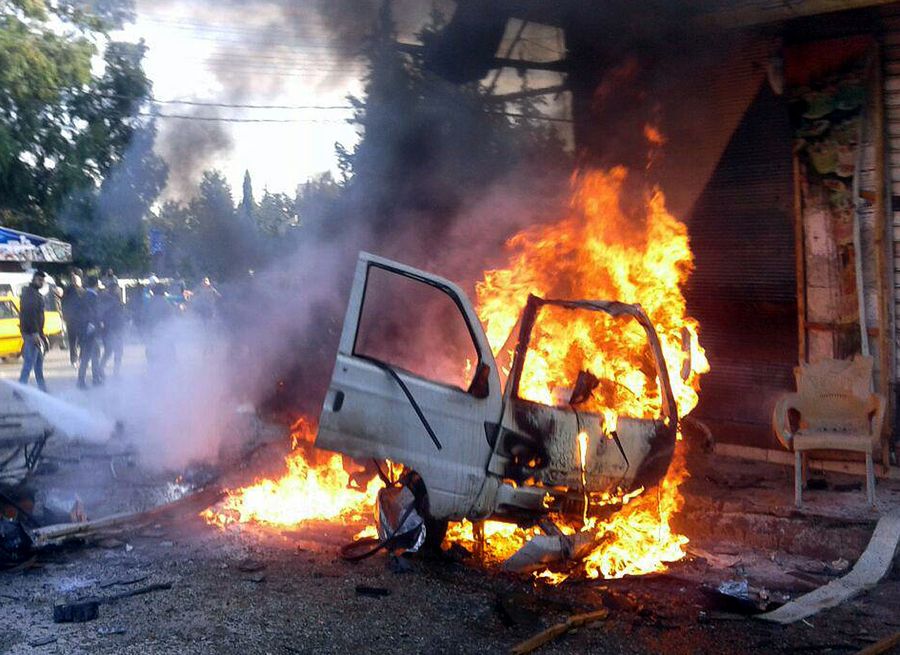
 A burning vehicle is seen at the site where a car bomb exploded in Latakia, Syria, on Jan. 22, 2019. (Xinhua)
On the humanitarian side, an estimated 400,000 people fled their homes in northwest Syria from May to August, she said.
UNITED NATIONS, Sept. 19 (Xinhua) -- The humanitarian situation in northwest Syria remains alarming despite a unilateral cease-fire in Idlib, Ursula Mueller, UN assistant secretary-general for humanitarian affairs, said Thursday.
There is a decline in fighting since Russia announced a unilateral cease-fire in the Idlib "de-escalation area" on Aug. 30, which the Syrian government later confirmed, Mueller told the Security Council.
However, worrying signs of insecurity are present, and the humanitarian situation remains alarming, she said in a briefing.
Ground forces have continued to exchange shelling in southern Idlib and eastern Latakia, and airstrikes were reported in central and northern Idlib over the past week.
At the same time, listed terrorist group Hayat Tahrir al-Sham and other non-state armed groups continue to harass, intimidate and coerce civilians, including medical workers, said Mueller.
On the humanitarian side, an estimated 400,000 people fled their homes in northwest Syria from May to August, she said.
Many of those people have been displaced multiple times, both before and during the current military escalation that began in late April. These displacements follow familiar patterns, with civilians largely moving northward, away from conflict-affected areas, to already densely populated areas in northern Idlib, she said.
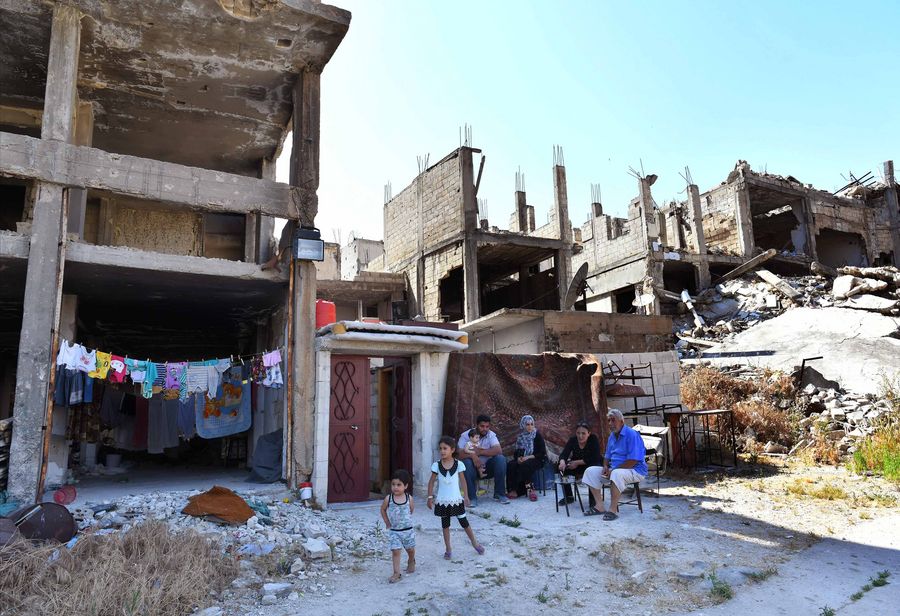
The Shtaiwi family sits outside their house amid the rubbles in the Wadi al-Sayeh street in the central city of Homs, Syria, May 29, 2019. (Xinhua/Ammar Safarjalani)
In addition to the needs of those displaced, host communities are becoming increasingly strained, leading to additional demands on overstretched humanitarian assistance. Needs in these areas are considerable across all sectors: food and non-food, water and sanitation, health, education, and protection, said Mueller, who is also the deputy emergency relief coordinator of the United Nations.
Given the current situation, it is critical that the much-needed respite for civilians continue, unimpeded humanitarian access be facilitated to all civilians in need, and the protected status of civilian infrastructure be respected, she said.
